Trending

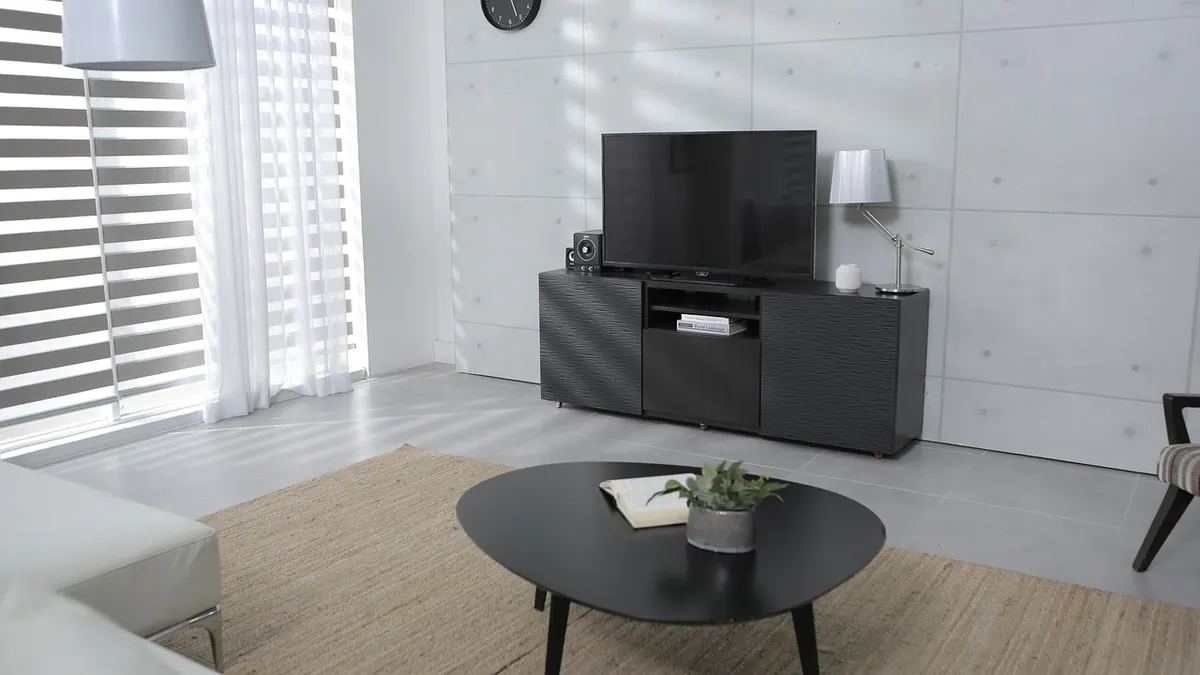
Curtains are one of the few things in a room that can make a window look bigger or smaller without changing a single thing about the window itself. Yet most disappointing results come down to the same handful of decisions: where the pole goes, how far past the frame it runs, where the hem lands, and what is sewn behind the fabric. Get those four right and an ordinary sash window starts to feel generous. Get them wrong and even lovely fabric looks mean and skimpy. Here are the mistakes worth knowing about, and the fixes that do not involve starting again from scratch.
Fitting the pole just above the window frame is the most common error in the book. It feels logical, because the frame is the obvious edge to work from, but it slices the wall above the window into two awkward bands and drags the whole elevation down. On a small window it is fatal.
Instead, take the pole as high as the room allows. Where there is no cornice, aim for the centre of the pole to sit roughly 5 to 10cm below the ceiling. Where there is a cornice, hanging just beneath it keeps the proportions intact. If you have a picture rail, sitting the pole just under the rail is usually the tidiest compromise.
Measure down from the ceiling at both ends of the run, not up from the frame. Old ceilings are rarely level, so mark both ends, join the marks with a pencilled line and set a spirit level against it before you drill anything. A pole that drops a centimetre across two metres is visible from the other side of the room, especially against a plain wall.
Width errors are quieter than height errors but just as damaging. A pole that runs only as far as the frame leaves the curtains nowhere to go when you open them, so they sit over the glass. On a narrow window, 15cm of glass lost at each side is the difference between a bright room and a dim one.
Add at least 15 to 20cm of pole beyond the frame at each end, and closer to 25 or 30cm on a large window or where the curtains are heavy. This is the stack-back space, and it is what lets the curtains hang clear of the glass when they are drawn back. Check the wall first: a radiator, a door frame or a socket can eat into that space, and it is better to find out before the fixings go in.
Most poles over about 1.8 metres need a centre bracket, which means leaving the middle of the wall free for it. Check the guidance that came with yours.
A hem that floats 5cm above the floor makes even expensive fabric look borrowed. A hem that stops at the sill when the rest of the room is floor-length looks unresolved. Curtains should end somewhere deliberate.
Measure the drop from the point the hook or eyelet actually hangs, not from the floor upwards. For a pencil pleat heading, that is the top of the pole plus the heading above the tape. For eyelets, remember the fabric sits a few centimetres above the pole itself. Ordering to the pole height alone is how curtains arrive an inch too short.
Lining is not an optional extra. It shields the face fabric from sunlight, helps the curtain fall in soft folds rather than stiff cones, and adds a layer of warmth at the window. Skip it and the curtains will look thin within a season.
This is where most ready-made curtains quietly fail. Fullness is the relationship between the flat width of the fabric and the width of the pole. Pencil pleat and pinched headings generally want two to two and a half times the pole width. Eyelets want around one and a half to two times, because the fabric falls in shallow waves rather than deep pleats.
A 180cm pole, then, wants roughly 400cm of flat fabric for a pleated heading. A pair of 117cm curtains gives you 234cm, somewhere near 1.3 times fullness, and no amount of steaming will make that look generous. Check the flat width on the packet before you buy, and if the numbers are close, size up.
Heading tape needs care too. Gather it to the width of the pole and tie the cords off securely, then distribute the pleats by hand so they are even. Pulled too tight, pencil pleat tape looks pinched across the top. Left too loose, the curtain hangs like a sheet.
Weight is the thing people underestimate. A lined, interlined curtain in a heavy fabric can be surprisingly substantial, and a plasterboard wall will not hold it with the screws that came in the box. Use proper hollow-wall fixings or, better still, fix into timber studs or masonry wherever you can.
Then walk the room and look for clashes. The back of the curtain should clear window handles, radiators and anything sitting on the sill. Tiebacks can undo all your width work by pulling the curtain back across the glass, so leave them off if
Photo: manbob86 / Pixabay