Trending

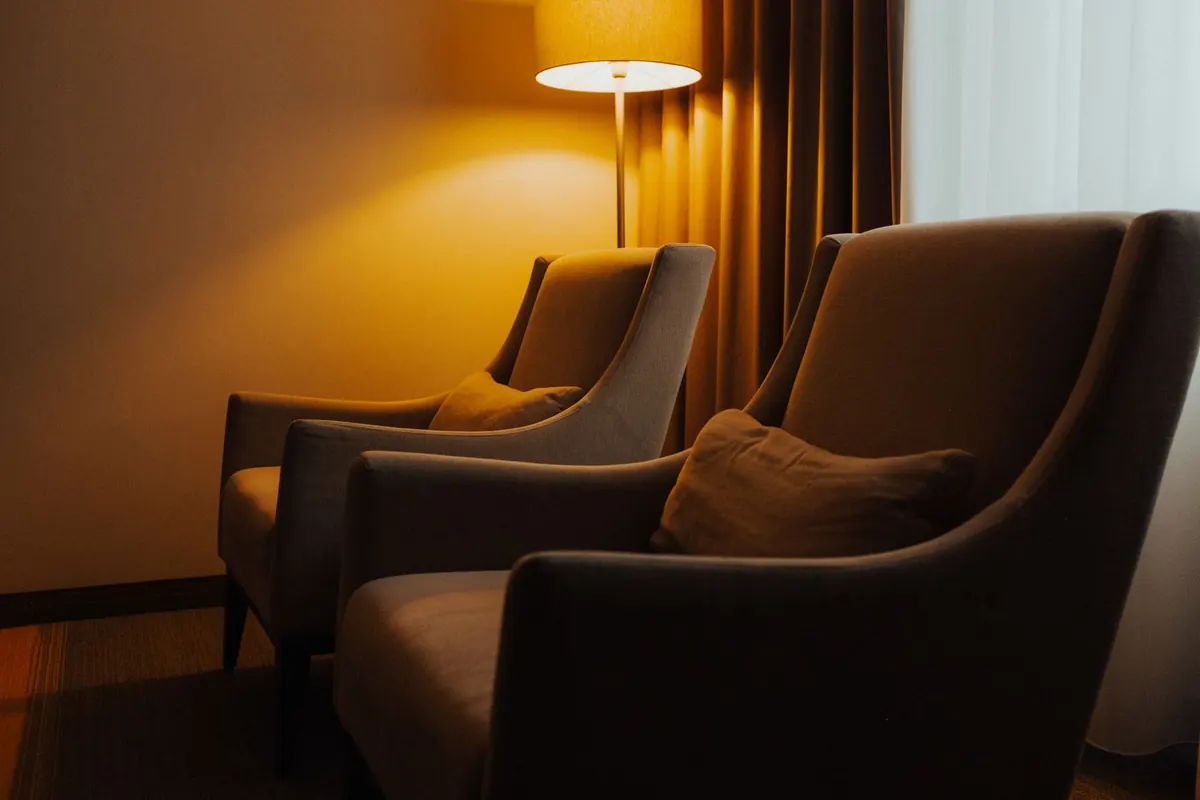
A reading corner does not need a spare room. In a small flat, it can be the strip of wall beside the window, the awkward gap between the sofa and the bookcase, or the corner currently occupied by bags and unopened post. Treat it as a tiny room of its own: one chair, one light, one surface, one place for books. Get those four elements right and the space will feel deliberate rather than squeezed.
Before you buy anything, measure the space. Note the width along both walls, the depth from the corner, and the height if you want a shelf. Check radiators, plug sockets, light switches, curtain hems and door swings. A chair that blocks a cupboard or traps a curtain will annoy you daily.
Mark the armchair footprint on the floor with masking tape or newspaper. Add rectangles for the side table and lamp base. Leave them there for an afternoon. Can you walk past without turning sideways? Can you reach the window?
Sit inside the taped chair shape with a book and a mug. If your knees touch the wall or the lamp cable crosses your path, adjust before you spend money. In a small flat, every centimetre has a job.
A bulky recliner will dominate a small room, but a slim armchair can make a corner feel intentional. Look for narrow arms, exposed legs and a low or medium back. Upholstered skirts and wide arms make a chair look heavier; visible floor underneath helps the room breathe.
Check seat width and depth, not just overall dimensions. If you are tall, a low back may not support your shoulders. If you are petite, a deep seat can leave your feet dangling. Cushions help, but it is easier to choose a chair that fits you first.
In a tight corner, place the chair at a slight angle rather than flat against one wall. This often frees floor space and makes the nook feel deliberate. A swivel chair can turn towards the window for daylight and back to the room later.
The table only needs to hold what you use while reading: a mug, a book, glasses or a phone. Round and oval tops work better than square ones because they have no sharp corners to catch your hip. The top should sit close to the chair arm so you can reach it without twisting.
A table covered in candles, plants and old magazines stops being useful. Leave room for the mug and book you actually put down. A small tray can corral a coaster, pen and remote without adding visual noise. If the corner is very tight, a wall-mounted drop-leaf table folds flat when not in use.
One overhead bulb rarely makes a corner feel cosy. Add a lamp at reading height: a table lamp on the side table, a slim floor lamp behind the chair, or a wall light if floor space is impossible. Angle the light over your shoulder and onto the page rather than into your eyes. A warm white bulb, around 2700K, is gentler than cool blue-white.
If there is no socket nearby, rechargeable table lamps and battery-powered wall lights are practical. They will not match mains brightness, but they can create a warm pool of light for a short reading session. Position the lamp so the bulb is not visible when you are sitting.
Use cable clips, trunking painted to match the wall, or run the cable behind furniture where it cannot be tripped over. If you need a new socket or wiring changed, use a qualified electrician. Do not overload extension leads.
Floor space is precious, so look upwards. A shallow shelf above the chair can hold current reads, a small plant and a framed print. Keep the depth modest—around 15–20 cm is often enough for paperbacks—so it does not crowd your head when you sit.
If you rent, check your tenancy agreement before drilling. Freestanding narrow bookcases and corner shelves are good alternatives. Fix any wall shelf properly into a suitable wall with the right fixings. A shelf that falls is worse than no shelf.
Keep only the books you are reading or truly love in the corner. Store the rest elsewhere and rotate them every few months. A basket under the side table can hold magazines; a slim magazine file can hide them completely.
Textiles soften sound and make the corner feel separate. A throw over the chair, one cushion, and a small flatweave rug can transform a hard floor. A warm throw also makes a chair usable in winter without turning up the heating. Add one or two personal things at eye level—a postcard, a print, a small object from a trip. If you use candles, never leave them unattended and keep them away from fabric and books.
The best reading corner is the one you actually sit in. Keep a book, a coaster and a charger within reach. Tidy the surface once a week and return stray mugs and post to their proper homes. If the corner becomes a dumping ground, add a small basket or hook nearby.
You do not need more space to read comfortably. You need a chair that fits, light in the right place, a surface for a mug, and a shelf that holds only what you love. Build that, and the smallest corner in the flat can become the best seat in the house.
Photo: Tasso Mitsarakis / Pexels